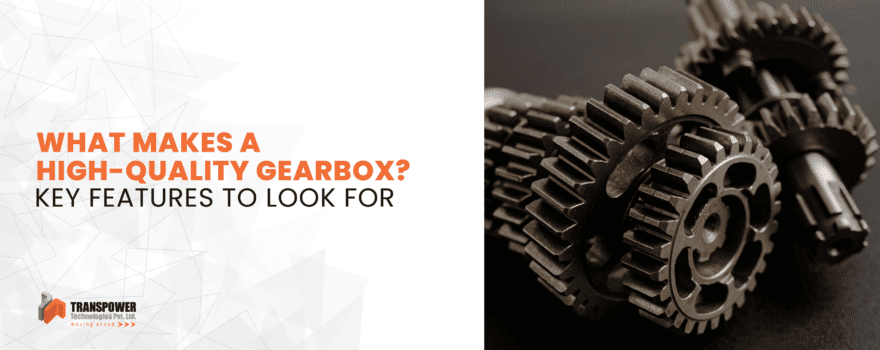
Gearboxes are the heart of many mechanical systems – from conveyor lines and heavy-duty pumps to wind turbines and precision robots. Selecting the right gearbox can dramatically affect the uptime, efficiency, maintenance costs, and lifespan of the equipment it drives. Below are the practical features and properties that distinguish a high-quality gearbox from an average gearbox.
Precision design and tight manufacturing tolerances
High-quality gearboxes are designed with precision: gears, shafts, and bearings must mesh and align within narrow tolerances so that the load is distributed evenly on the teeth. Precise machining and strict quality control minimize vibration, noise, and local wear – all of which extend service life and maintain efficiency under load. Look for manufacturers that publish gear geometry tolerances and, where applicable, use processes such as CNC finishing, shot-peening, and case hardening.
Material selection and heat treatment
The base materials (alloy steels, case-hardened steels, nitrided surfaces) and their heat treatment determine the resistance of teeth to burrs, bending fatigue, and abrasion. High-quality gearboxes use materials and surface treatments selected for the intended load, environment (corrosive, high temperatures), and duty cycle. For precision and long life, hardened and ground gear teeth and protective surface treatments make a measurable difference.
Bearings and shafts engineered for load & misalignment
Bearings that are correctly sized and rated for axial/radial loads prevent premature failures. Shaft design that accommodates deflection and thermal expansion, and effective sealing against contaminants are markers of good gearbox engineering. Manufacturers who run finite element analysis (FEA) on shafts and bearing housings and publish their load-rated life estimates are better off.
Lubrication system and thermal management
Proper lubrication reduces friction, dissipates heat, and carries away debris. High-quality gearboxes include thoughtful lubrication features: suitable oil sumps, breathers, sight glasses, easy oil-change access, and sometimes forced-lubrication or oil cooling for high-power applications. Temperature control (coolers, fans, or integrated heat exchangers) prevents oil degradation and protects bearings and gears.
Noise, vibration, and harshness (NVH) control
Lower noise levels usually mean better alignment and manufacturing quality. Good gearboxes are designed with attention to NVH using optimized tooth profiles, damping housing, and careful balancing. For sensitive industrial or indoor environments, NVH performance isn’t a show – it’s a reliability indicator.
Modularity, serviceability, and documentation
Ease of servicing – replaceable seals, accessible bearings, clear torque and assembly specs – minimizes downtime and maintenance costs. A reputable gearbox supplier provides detailed documentation (assembly drawings, lubrication schedules, torque charts, spare-part lists) and supports spare-part availability. Modular designs that allow a single stage to be replaced rather than the entire unit save money over the life of the equipment.
Testing, validation, and quality certifications
Look for vendors that perform load testing, run-in testing, and vibration analysis on finished units. International standards (ISO, AGMA, DIN) and factory quality certification (e.g., ISO 9001) are useful quality indicators – they do not guarantee perfection but show a consistent process.
Application fit: efficiency, backlash, and gear type
Match the gearbox type (helical, bevel, worm, planetary, parallel shaft) to the application. Consider efficiency and acceptable response: Robotics and positioning systems require very little response; Heavy torque transfer favors helical or planetary designs. Efficiency matters – energy lost in friction adds up in high-duty installations.
Reliability data & industry trends
As industrial automation continues to grow, investing in high-quality gearboxes is becoming increasingly important: the global industrial gearbox market is estimated to be worth US$30.6 billion in 2024, reflecting growing demand in manufacturing and heavy industries.
A supplementary note on reliability: Engineering analysis shows that, with modern design and testing standards, the probability of gearbox failure within a sufficient service period can be very low – for example, some reliability studies report a probability of failure within 20,000 hours of less than 0.2%s for well-designed systems when proper standards and maintenance are followed.
Conclusion
A high-quality gearbox is the result of purposeful design (materials, tooth geometry), precision manufacturing, proper lubrication and thermal design, and robust validation/testing. Apart from component specifications, serviceability, documentation, and reliable aftermarket support are what keep the system running and costs predictable.
For businesses looking for reliable, industrial-grade gearboxes, Transpower Technologies offers solutions engineered for performance and durability. With a focus on precision manufacturing, proper material selection, and comprehensive after-sales support, Transpower Technologies offers gearboxes built to meet industrial needs – helping you minimize downtime and lower lifetime operating costs.