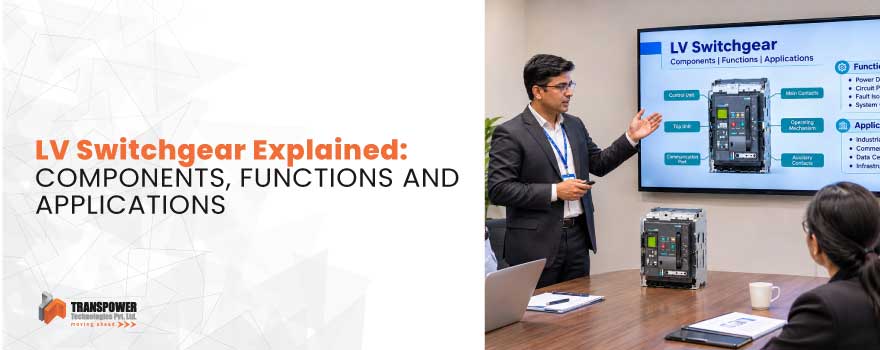
The LV switchgear is a control and protection system for electrical machinery within industrial power systems that run on low voltages. The components of LV switchgear include circuit breakers, contactors, bus bars, fuses and protective relays with different roles for protecting and controlling the electrical installations. For plants involved in production industries like pharmaceuticals, chemicals and textile industries, proper LV switchgear ensures safety and power distribution.
What Is LV Switchgear?
LV is the abbreviation of Low Voltage. LV switchgears consist of electrically operated components or assemblies that are used for operation in low voltage systems, normally up to 1,000 V AC or 1,500 V DC, according to the corresponding IEC 60947 standards.
Such systems are usually placed between the power source and the loads. These systems ensure distribution of the electric power to the different parts of the facility, protecting from overloads and short circuits.
In case of an industrial facility, LV switchgear system may receive power from the transformer and distribute it to the motors, pumps, compressors, lighting systems and other loads.
Main Components of LV Switchgear and Their Functions
An LV switchgear system contains several components. Each one performs a different function, and the correct combination depends on the electrical load, protection requirements and operating conditions.
Circuit Breakers
The circuit breakers trip off the power supply when the specific faults are detected by the circuit breaker. Circuit breakers ensure that the cables, electrical circuits, and machinery do not get damaged due to the faults.
Types of circuit breakers:
MCB (Miniature Circuit Breaker): This type is commonly used where the load current requirement is low such as lighting circuits, etc.
MCCB (Molded Case Circuit Breaker): Used for medium load applications and industry distribution systems depending upon the rated current and breaking capacity.
ACB (Air Circuit Breaker): This is generally used for main protection as an incoming breaker in low voltage distribution system.
Contactors
Contactors are switching devices that are controlled by electricity and are used to control various equipment like motors, heaters, pumps and so forth.
In case of a factory motor, for instance, it can be controlled using a contactor which is connected to a push-button station, PLC or any other type of controller.
Contactors find wide application in motor control panels and in automation systems. They are switching devices and therefore it is necessary to provide appropriate overload and short-circuit protection for them.
Overload Relays
Overload relays are used to protect the motor from overloading currents, which will lead to overheating. Overload relays can be used with contactors in combination with motor starters.
Overload relays operate in such a way that when a motor is overloaded for a sufficiently long time, an overload relay can open the control circuit and turn off the motor.
Proper selection of an overload relay includes determination of motor data.
Busbars
Busbars refer to conductive metal bars, usually made of either copper or aluminum, used in the distribution of electricity in a switchgear installation.
They are responsible for connecting power supplies and circuits, and facilitate proper distribution of electricity within the installation.
The configuration and dimensions of the busbar are dictated by the capacity, temperature rise, and short circuit withstand capability of the installation.
Fuses
Fuses act as protective elements by melting the internal part in case of excess current passing through them. After operating, the fuses need to be changed to the proper one.
Fuses are applied in some types of control circuits and distribution. The fuse should have the right voltage rating, current rating, and breaking capacity as per the circuit’s requirements.
Protective Relays
A protective relay is a device that monitors the condition of an electrical system and initiates a trip once a fault is detected in the system. The purpose of the relay is to protect the electrical system from overcurrent, earth fault, under-voltage, and other electrical problems.
Metering and Indication Devices
Meters and indicators help operators monitor the electrical system. Common devices include:
- Ammeter for measuring current
- Voltmeter for measuring voltage
- Energy meter for recording electrical energy consumption
- Indicator lamps for showing operating status
- Multifunction meters for monitoring several electrical parameters
These devices help maintenance teams understand system performance and identify unusual operating conditions.
How Does LV Switchgear Work?
LV switchgear manages the flow of electricity from an incoming power source to different outgoing circuits. Its operation can be understood through a typical industrial power distribution arrangement.
Power enters the system: Electricity is received from a transformer or another suitable low-voltage source.
Main protection is provided: An incoming circuit breaker protects the main distribution system against specified electrical faults.
Power is distributed: Busbars carry electricity to outgoing feeders.
Individual circuits are protected: MCBs, MCCBs or other protective devices are selected according to the requirements of each circuit.
Equipment is controlled: Contactors and control devices switch motors and other loads as required.
Electrical conditions are monitored: Metering and indication devices provide information about voltage, current and operating status.
If a fault occurs, the relevant protective device should operate to isolate the affected circuit. Proper protection coordination helps limit unnecessary interruptions to other parts of the plant.
Applications of LV Switchgear in Industrial Plants
LV switchgear is used in many industries because electrical power must be distributed and controlled safely across different machines and operational areas.
Chemical and Pharmaceutical Industries
Chemical and pharmaceutical facilities use motors, pumps, mixers, compressors and process equipment. LV switchgear helps distribute power to these systems and provides the required electrical protection.
Equipment selection should account for the site’s environmental conditions, including temperature, dust, moisture and any hazardous-area requirements.
Textile Industries
Textile plants operate spinning machines, looms, compressors, pumps and material-handling equipment. LV switchgear supports motor control and power distribution across production areas.
Correctly selected protection devices can help reduce the risk of equipment damage caused by electrical faults.
Manufacturing Plants
Manufacturing facilities use a combination of production machines, conveyors, motors and auxiliary equipment. LV switchgear helps organise power distribution and allows individual circuits to be controlled and isolated when required.
Water Treatment and Pumping Stations
The pumps in pumping stations have motors to transport water through pipes and treatments. LV Switchgear helps in controlling the starting and stopping of the motor, and electrical protection.
A number of components can be used depending on the motor, which could be; contactors, overload relay, circuit breaker, among others.
Commercial and Infrastructure Facilities
Buildings, warehouses and infrastructure facilities use LV distribution systems for lighting, HVAC equipment, lifts, pumps and other electrical loads. Switchgear helps distribute power and protect individual circuits.
Important Factors to Consider When Selecting LV Switchgear
Choosing LV switchgear requires more than matching a circuit breaker’s current rating. The complete system must suit the electrical installation and its operating environment.
1. Rated voltage and current: Check the system voltage and the maximum expected load current. Every component must have suitable ratings for its intended circuit.
2. Short-circuit breaking capacity: The protective device must be capable of safely interrupting the prospective fault current at its installation point. Do not select a breaker based only on its ampere rating.
3. Type of electrical load: Motors, heaters, lighting circuits and electronic equipment have different operating characteristics. Starting current and switching frequency can influence component selection.
4. Protection coordination: Protective devices should be selected and coordinated so that the device closest to a fault operates wherever the design allows. This can help prevent an issue in one circuit from interrupting the entire facility.
5. Operating environment: Temperature, humidity, dust, ventilation and installation location can affect equipment performance. Special environments may require suitable enclosures and additional precautions.
6. Maintenance and accessibility: Consider whether operators can safely inspect, test and replace components. Clear labelling and a well-organised panel layout also help maintenance teams.
7. Standards and verification: Check the applicable product and assembly standards, technical documentation and verification requirements before purchasing or installing switchgear.
Why Quality LV Switchgear Matters for Industrial Operations?
The proper installation of LV switchgear ensures safe and orderly electrical distribution. Moreover, the LV switchgear is also useful for the maintenance team to isolate circuits, detect faults, and operate electrical equipment.
In the case of a manufacturing industry, the incorrect rating of circuit breakers and improper coordination of the protection system may cause equipment failures and production downtimes. Therefore, engineers and the procurement department need to check all technical specifications, fault level, application requirements, and installation details before purchasing the equipment.
But merely having the switchgear is not enough to avoid all kinds of electrical failures.
Conclusion
LV switchgear is crucial for controlling the electrical load as well as protecting circuits from the specified types of faults. Familiarity with MCCB, ACB, contactor, busbar and protective relay will help the plant engineer and purchaser in assessing the equipment requirements.
Transpower Technologies provides Siemens switchgear and other industrial electrical products to meet the needs of industrial buyers in Vadodara and Gujarat state. With its vast 70+ years of experience in the group, Transpower helps industrial purchasers with the selection and supply of electrical products.
Find out about the Siemens Switchgear range at Transpower Technologies or contact our team for your industrial switchgear requirements.