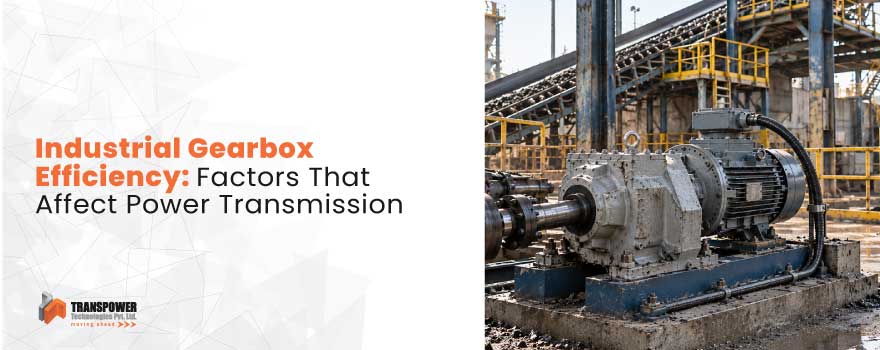
Efficiency of industrial gearbox is highly significant in terms of transferring power from an electric motor to the machine. Proper selection of a gearbox assists in minimizing losses of energy and ensuring appropriate output speed and torque. In the case of industrial applications such as chemical industry, pharmaceutical industry, textile industry, and cement industry, certain variables contribute to the overall performance of a gearbox.
What Is Industrial Gearbox Efficiency?
The efficiency of an industrial gearbox indicates the amount of input power that passes to the output shaft of the gearbox while taking into consideration the energy losses in the gearbox.
If the gearbox uses 10 kW of input power from a motor and provides only 9 kW at the output, then its efficiency is 90%. The difference between these two powers, 1 kW, represents the loss of energy caused by friction, heat, or mechanical resistance.
An efficient gearbox will be able to pass most of the power from the motor to the machinery being operated. However, the efficiency of a gearbox can depend upon the design of the gearbox, environmental conditions, and use of the gearbox.
Key Factors That Affect Industrial Gearbox Efficiency
Several mechanical and operating conditions determine how efficiently a gearbox transfers power. Understanding these factors helps plant engineers select suitable equipment and avoid unnecessary energy losses.
Gearbox Type and Design
Gearbox design greatly influences the efficiency of the power transmission process. Various gear systems differ in terms of friction, operation, and use.
Helical gearboxes usually demonstrate relatively high efficiency and smoothness of work, since their gears engage in a gradual way. Worm gearboxes give high reduction ratio in compact design, but due to sliding interaction between worm and wheel, they generate more friction and heat.
Types of industrial gearboxes are:
Helical gearbox: Suitable for conveyors, mixers, and general industrial machinery where efficient power transmission is required.
Worm gearbox: Used where high speed reduction and compact installation are important.
Bevel helical gearbox: Suitable for applications requiring a change in the direction of power transmission.
Helical-worm gearbox: Combines different gear arrangements to meet specific speed reduction and installation requirements.
Gear Ratio and Output Speed
Ratio of gears affects the amount of reduction that takes place in the gearbox with respect to the speed of the motor. It is possible for choosing a wrong ratio of gear that might influence the performance of the machinery.
This means that if the motor runs at 1,440 RPM, and the gearbox ratio is 20:1, the calculated speed of output will be:
Output speed = 1,440 ÷ 20 = 72 RPM
However, the actual speed of output will depend on the speed of the motor and the design of the gearbox.
A proper ratio of gears will enable the driven machine to work at the desired speed without putting extra burden on the motor and gearbox.
Lubrication Quality and Oil Selection
Gear lubrication decreases the friction and heat generated by the moving parts of the gear set and controls the operating temperature. If the lubrication system fails, the gear teeth and the gear bearings will experience excessive wear and power loss.
A lubricant should be chosen based on the characteristics of the gearbox, taking into account the grade of viscosity, temperature, load, and the design of the gearbox.
In industrial applications, the oil needs to be tested regularly. Poor or contaminated oil can reduce the performance of the gearbox even if it was properly selected at the start.
Operating Load and Torque Requirements
Every gearbox is designed to handle a specific torque and load range. Operating beyond its rated capacity can increase friction, temperature, and mechanical stress.
For example, a gearbox used in a conveyor system carrying heavier materials than its design capacity may experience excessive loading. This can accelerate gear and bearing wear.
Undersizing a gearbox can cause premature failure, while selecting an unnecessarily oversized unit may increase initial equipment costs and installation requirements.
Engineers should consider starting torque, continuous operating load, peak load, and service conditions when selecting a gearbox.
Gearbox Alignment and Installation
Improper installation may result in reduced efficiency in power transfer and premature failure of machinery. Any misalignment between the motor, gearbox, and the driven machinery will result in extra loading of the shafts, bearings, and couplings.
When installing, engineers need to examine the mounting base, shaft alignment, coupling, and even the stability of the foundation.
An illustration is where the gearbox is mounted on a conveyor belt drive mechanism that has improper shaft alignment resulting in vibrations and bearing loads.
Maintenance and Component Condition
The wear and tear occurs in gears, bearings, seals, and shafts while operating normally. The wear can gradually increase friction, vibration, and noise.
A well-planned maintenance program can help to keep the gearbox in its best condition. The inspection interval can depend on operating hours, loading conditions, manufacturer’s recommendations, and the industrial environment.
Unusual noise and vibration in the plant maintenance program should not be overlooked, as it can be caused by several factors.
How to Improve Industrial Gearbox Efficiency?
Improving gearbox efficiency does not always require replacing the existing unit. In many cases, correct selection, installation, and maintenance can reduce avoidable power losses.
Here are some practical steps for industrial users:
Select the correct gearbox for the application: Check the required torque, output speed, gear ratio, mounting position, and operating duty before purchasing.
Follow lubrication recommendations: Use the lubricant grade specified by the gearbox manufacturer and maintain the recommended oil level.
Avoid continuous overloading: Match the gearbox rating to the actual machine load, including starting and peak torque requirements.
Maintain proper alignment: Check motor-to-gearbox and gearbox-to-machine alignment during installation and maintenance.
Monitor operating conditions: Keep track of temperature, vibration, noise, and lubricant condition to identify problems early.
Follow manufacturer guidelines: Maintenance intervals and operating limits vary between gearbox models. Always refer to the manufacturer’s technical documentation.
Choosing the Right Industrial Gearbox for Your Factory
The type of gearbox used will depend on the machine, the surroundings, and the requirement of power transmission. A conveyor system, chemical mixing machine, textile machine, and cement handling machine will have different requirements in their gearboxes.
For industrial purposes, the Rotomotive gearboxes provide different types of configuration for power transmission. The correct model is required to be chosen depending upon the requirements of the machine.
Transpower Technologies, located in Makarpura GIDC, Vadodara, provides industrial gearboxes and power transmission products for manufacturing industries in Gujarat. With 70 years of experience in the group, Transpower Technologies helps industrial buyers in choosing the correct equipment for them.
Choose from industrial gearbox products by Transpower Technologies.
Conclusion
Efficiency of industrial gearboxes is not limited to the gearbox alone. There are other factors that play an important role in determining gearbox efficiency such as gear configuration, lubrication, power capability, alignment, temperature, and maintenance.
The right choice of gearbox will ensure efficient performance of the machines used in factories in Vadodara and Gujarat. Transpower Technologies provides various industrial gearboxes.